Your watch knows your resting heart rate before your doctor does. Your earbuds track your posture during a run. A ring on your finger logs your temperature while you sleep. And all of it lands on the same screen you use to answer messages — your phone. That convergence is the story nobody tells properly, because most coverage treats wearables as gadgets and mobile as a separate world. They aren't. The wearable technology trends shaping mobile ecosystems in 2026 are mostly about what happens after the sensor collects the data: which platform ingests it, which app makes sense of it, and who decides what gets shared.
Key Takeaways
- Wearables increasingly dictate mobile design choices: glanceable widgets, background health APIs, and battery-first architecture.
- The real battle is between health data platforms (HealthKit, Health Connect) and who gets access to your biometrics.
- Sensor accuracy remains the weak link — and the biggest source of user distrust.
- Interoperability is improving but remains partial; cross-ecosystem migration is still painful.
- EMF exposure from smartwatches sits far below regulatory limits, but the privacy question is far more concrete.
Wearable technology trends shaping mobile ecosystems right now
Here's the thing most trend pieces miss: a wearable is only as good as the phone it talks to. The hardware gets the headlines, the mobile integration does the actual work. When I rebuilt a small sleep-tracking app two years ago, the entire project stalled not on sensor data but on how often the phone's OS allowed background sync. Battery policy decided our product roadmap. Not the sensor. Not the algorithm. The mobile operating system.
Health APIs have become the real battleground
Every serious wearable now ships data into a phone-side health repository. Apple's HealthKit and Google's Health Connect are the two dominant pipes, and their rules shape what third-party developers can build. Ask any mobile dev who has shipped a fitness feature: the permission model alone can eat a week of work. The trend isn't "more sensors" — it's tighter control over who reads the resulting streams.
Form factors multiply, but the phone stays the hub
Smart rings, connected patches, smart glasses, chest straps, even prototype contact lenses. The variety is real. The dependency isn't going anywhere. Almost every one of these devices relies on a phone for setup, firmware updates, and heavier computation. That's a structural constraint, not a temporary one — and it means mobile UX is the bottleneck for wearable adoption.
What are the current trends in wearable technology?
Strip away the marketing and four movements dominate in 2026.
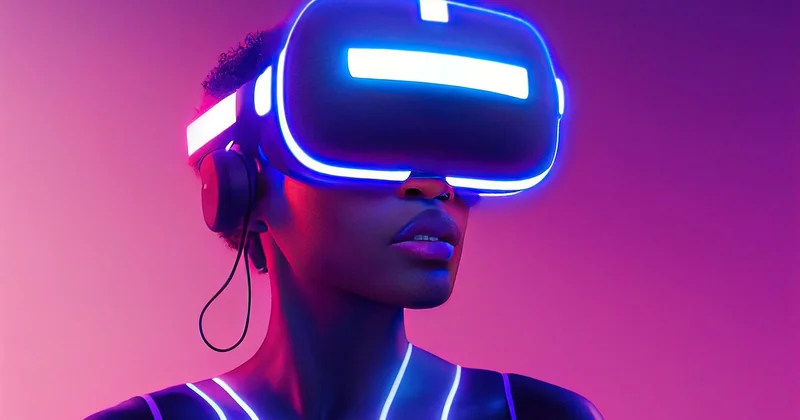
- Health monitoring moves from novelty to clinical adjacency. Blood oxygen, temperature, irregular rhythm alerts. The devices are drifting toward regulated medical territory, which changes the mobile software that supports them.
- Battery life becomes the headline spec. Users tolerate imperfect accuracy. They don't tolerate charging twice a day.
- On-device processing. More computation happens on the wrist, and the phone handles aggregation and display.
- Ambient and screenless interaction — haptics, voice, and gesture replacing the tap-and-swipe model borrowed from phones.
Notice what's absent from that list: radical new sensor categories. The interesting shift is architectural. Devices are getting quieter, less screen-dependent, and more dependent on the phone as a relay rather than a display.
The display is retreating
For a decade, the assumption was that wearables would become tiny phones. That assumption is collapsing. Rings have no screen. Glasses use projection. Patches have nothing at all. The mobile app becomes the interface the device never had — which puts enormous pressure on notification design and glanceable summaries. A wearable that requires you to open an app to understand it has already failed.
What did RFK Jr. say about wearables?
Robert F. Kennedy Jr., in his capacity as a public health figure, has repeatedly raised concerns about wearable devices — specifically about the accuracy and reliability of the health data they generate, and about the broader question of who owns and controls that biometric information. His public remarks have leaned on skepticism toward unregulated health metrics rather than on claims that the devices themselves are physically harmful.

Worth separating two strands here, because they get conflated constantly. One is a data governance argument: who collects your heart rate, where it goes, what it's used for. The other is a device safety argument. Kennedy's public statements have mostly sat in the first camp, questioning the trust users place in consumer health readings. Whether you find that persuasive or not, the underlying question is legitimate — and it maps directly onto the mobile ecosystem, where the health repository on your phone is the single richest source of personal data you own.
My own view: the accuracy critique has teeth. The governance critique has more. More on that below.
Do smart watches expose me to EMF radiation?
Yes, technically — every wireless device emits some electromagnetic field. No, the levels aren't a credible health concern at typical exposure. Smartwatches transmit via Bluetooth and, on cellular models, low-power radio, at output levels far below the regulatory ceilings set for consumer electronics. A phone held to your ear emits considerably more.
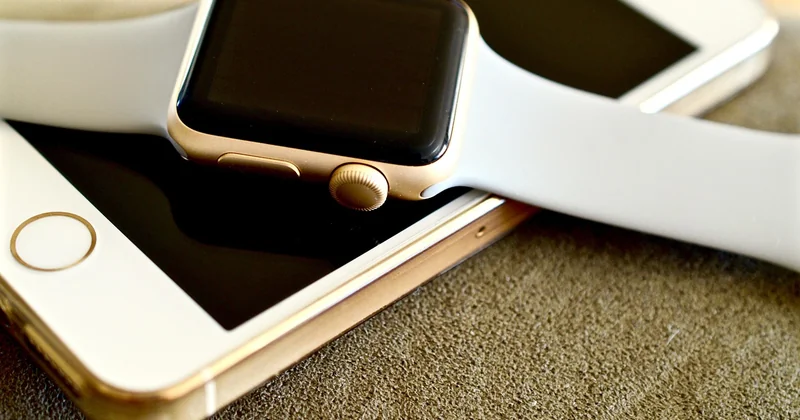
Here's the honest framing though. The EMF question is the one users ask about. The one that should worry them is different: a wearable streams a continuous biometric record, and the security of that stream depends on the weakest link in the chain — usually an app with sloppy permissions. I'd spend my concern budget there.
The privacy question is more concrete
Biometric data can't be reset like a password. Once a sleep pattern or cardiac baseline leaks, it's permanent. When you grant a third-party app access to your phone's health repository, you're often granting read access to years of accumulated readings. That's the trade most users make without noticing.
What are the current trends in mobile technology?
The mobile side of this convergence has its own momentum, and it's largely a response to wearables.
| Trend | What it means for wearables | Practical effect |
|---|---|---|
| Background health APIs | OS-level permission frameworks for continuous data | More reliable passive tracking, stricter consent flows |
| On-device inference | Model runs on phone, not cloud | Lower latency, better privacy story |
| Widget and glanceable surfaces | Data shown without opening an app | Wearable insights become useful at a glance |
| Battery-aware scheduling | OS throttles background sync | Sync reliability still unpredictable |
That last row is the one that keeps biting developers. I lost a weekend last year chasing what looked like a sync bug and turned out to be the OS aggressively deferring background work on a low battery. The data was fine. The scheduling wasn't.
Interoperability still isn't solved
Moving from one phone platform to another with years of health data intact remains clumsy. Export formats exist, but they're lossy, and the receiving platform rarely reconstructs the full history cleanly. For anyone who has tried to migrate a training log across ecosystems, the experience is a reminder that your biometric history is only as portable as the platforms allow. Standards work is happening; the user-facing result is still uneven.
What this means if you build mobile products
Three things I'd insist on, based on getting this wrong first.
- Design for the glance, not the session. If your wearable feature needs more than two seconds of screen time, it's not a wearable feature.
- Assume background sync will fail sometimes and design the recovery path first. Users notice missing data far more than they notice slightly stale data.
- Treat the permission prompt as product design, not a legal checkbox. The wording decides your retention.
The devices will keep multiplying. The phone will keep being the place where it all lands. Which means the wearable technology trends worth watching in 2026 aren't really about what you strap to your wrist — they're about what your phone is quietly permitted to do with it while you sleep.