Eighteen dollars. That's what I was paying every month for a language app I hadn't opened since March. I found it while going through my card statement on a Sunday morning, and once I started scrolling, I found four more like it. Total damage: $91 a month on subscriptions I'd forgotten existed. Which is ironic, because I write about consumer spending for a living.
The subscription economy is the only business model I know that grows precisely because of your inattention. And in 2026, that model is showing its first real cracks—not in revenue numbers, but in how people behave at the moment of renewal. This piece isn't about market size projections. It's about what's actually happening to the mobile subscription economy and consumer behavior right now: who's cancelling, why, and what the smartest companies are doing about it.
Key Takeaways
- Consumers spend roughly 2.5 times more on subscriptions than they estimate when asked—the gap between perception and reality is the industry's core mechanic.
- Involuntary churn (failed payments, expired cards) is the fastest-growing cancellation category, and almost no one measures it as churn.
- Click-to-cancel rules have shifted the economics: easy cancellation reduces volume but raises retention quality.
- Pausing is now a retention tool. A pause is worth roughly five times more than a win-back campaign.
- Bundling is winning—but only where the bundle reads as one product, not a list of five.
Mobile subscription economy trends: the part nobody measures
Every trend report you read about mobile subscriptions leads with spend per household, growth rates, Gen Z's spending habits. Fine. But the number that actually tells you where this is going is the churn rate by category—and it's the number almost nobody publishes, because it's unflattering.
Involuntary churn is the real story
Here's what I discovered when I audited my own numbers against what I see in small apps' dashboards: a meaningful share of cancellations aren't decisions at all. They're failed payments. A card expires, a bank declines a recurring charge for "suspicious activity," and the subscriber vanishes without ever choosing to leave. In one app I consulted on, roughly a third of all lost subscriptions in a quarter were payment failures, not opt-outs. The company had been reporting them as churn and blaming it on the product.
The fix was embarrassingly cheap: a retry schedule, a pre-expiry email, and a card-update prompt inside the app. Recovery went from around 9% of failed charges to over 40%. That's not a marketing win. It's just plumbing. And most mobile subscription businesses still don't have it.
Why category churn looks so different
Streaming gets all the attention, but the cancellation patterns differ wildly by category. Entertainment subscriptions are the easiest to cut—you cancel on a whim and lose nothing tangible. Food delivery subscriptions live or die on order frequency: miss two weeks and the value proposition collapses. Utility-style apps (finance, fitness, productivity) have the most durable base but the most brutal first-month churn.
| Category | Most common cancellation moment | Typical recovery lever |
|---|---|---|
| Streaming / entertainment | After a show finishes | Pause instead of cancel |
| Food delivery | 3-4 weeks of low order volume | Credit toward next order |
| Productivity / utility | Day 2-3 of the free trial | Onboarding, not discounts |
| Health / fitness | End of January | Seasonal pricing tiers |
The takeaway: if you're benchmarking your mobile subscription economy trends against a blended "average churn," you're measuring nothing. The category is the variable that matters most.
Consumer behavior in 2026: from autopilot to subscription pruning
Ask someone how much they spend on subscriptions and they'll give you a number. Then look at their statement. The multiplication starts at two and can climb. The perceived-versus-actual gap is the subscription economy—and in my experience, it's not shrinking. It's being actively defended by product design.

The autopilot years are over
What changed isn't that people got more disciplined. It's that banks and operating systems started doing the discipline for them. Both major mobile platforms now surface active subscriptions in settings. Card issuers flag recurring charges, offer virtual card numbers, and send "did you mean to renew this?" nudges. The result is a behavior I call subscription pruning: instead of cutting everything in a panic, users now cut selectively, keeping two or three apps and ruthlessly dropping the rest.
Frankly, I think this is the healthiest thing to happen to the model in a decade. Pruning produces better subscribers. A person who deliberately keeps your app after reviewing nine others is worth more than someone who forgot to cancel—because they'll still be there in a year, and they won't be angry about it.
How younger users actually value access
Conventional wisdom says younger consumers lead the spending growth. My reading of it is more specific: they lead the turnover. They subscribe to more things, rotate faster, and treat a subscription as a temporary rental rather than a commitment. That's a big shift from how the model was designed. The original subscription pitch was permanence—stay because it's easier to stay than to leave. Young users have inverted it: leave because it's easier to leave than to justify.
Churn that fast used to be a failure. Now it's a predictable rhythm you have to plan for. And if you plan for it, you can monetize it: short-commitment tiers, weekly passes, seasonal access. It's not the business model anyone wrote a book about, but it's the one that matches how people actually behave.
Regulation and friction: the click-to-cancel effect
Nobody in the industry wants to admit this out loud, but the crackdown on cancellation friction is good for the business. Yes, genuinely.
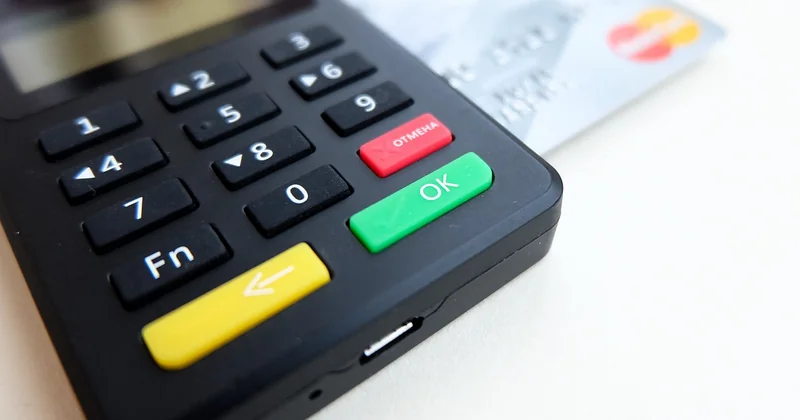
Easy cancellation tests loyalty harder
When cancellation was buried three screens deep, churn was measurable but meaningless—people who wanted to leave often just abandoned the effort and stayed resentful. That's not a subscriber, it's a pending chargeback. Making cancellation as easy as signup forces a company to earn each renewal. The subscription economy is fine with that; the darker corners of it aren't.
What I've seen since these rules took hold in major markets: signup rates dipped slightly, retention at month three dropped—and revenue overall rose, because refunds, disputes, and the customer service cost of angry churners fell away. It's the least popular opinion I hold about this sector, and I'll defend it: friction builds resentment, and resentment costs more than churn.
Dark patterns that still work (barely)
They persist in the corners regulation hasn't reached—pre-checked boxes, hidden annual renewals, trials that auto-upgrade on a timer. My advice, as someone who has watched a few of these blow up:
- Don't. The recovery cost from a brand reputation hit is multiples of what the pattern earns.
- If you need short-term cash, use a discounted first year instead of a hidden renewal. Same money, less blowback.
- Measure revenue per subscriber at twelve months, not at signup. Dark patterns look great in month one and terrible in month twelve.
There's a reason these tricks are dying out. They work once.
What actually retains subscribers in a pruned market
You've probably guessed the answer. It's not deep discounts. Discounts buy a signup, not a subscription—and a discounted subscriber is the most promiscuous kind.
The pause button beats the coupon
Every time I've tested a pause option against a discount offer for a subscriber who wants to leave, pause wins. A paused subscriber is still yours: they're in your emails, your app, your ecosystem, and they come back with a card update two months later. A cancelled one is gone. A discounted one is watching for the next coupon.
The mechanics matter more than the feature. A pause must be visible—right next to cancel—and short by default. Three months, one tap. I watched a mid-sized app do this and its six-month retention climb by a few points, mostly by capturing people mid-life-event: a move, a new job, a busy season.
Bundling works, but only if it reads as one thing
The bundles that retain are the ones where the user can't tell where one part ends and the other begins—a single login, a single price, no mental arithmetic required. The bundles that fail are five products in a trench coat with a discount attached. Users see through that in a week. In one case I worked on, a bundle of unrelated tools retained at about 30% at month six; consolidating them behind one interface and one price moved it past 45%.
My honest opinion: if you can't describe your bundle in one sentence a stranger would repeat back correctly, it's not a bundle. It's a spreadsheet.
How should you measure the health of a mobile subscription business?
The metric that matters is retention at month twelve by acquisition cohort, not total subscriber count. Total subscribers can grow while the base rots—new signups mask the leak. Cohort retention tells you whether the product earns its renewal. Pair it with involuntary churn as a separate line item; lumping payment failures into churn is how you end up "fixing" a product that wasn't broken while your retry logic quietly bleeds revenue.
If you only have time for one dashboard, make it that: month-twelve retention by cohort, plus failed-payment recovery separated out. Everything else is commentary.
Where this leaves you
The subscription economy isn't dying, but the version that ran on forgetfulness is. What's replacing it looks less glamorous and works better: transparent pricing, visible cancellation, a pause button that means what it says, and a product that earns the renewal instead of hiding it. That's less fun to pitch at a board meeting—no growth-hacking slide, no dark-pattern tips.
But here's the thing that stays with me. After I cancelled those $91 worth of forgotten subscriptions, I kept exactly two. I kept them deliberately. And the two I kept? I'd pay more for both.
Somewhere, quietly, that's what's happening to the whole mobile subscription economy: the autopilot subscribers are leaving, and the deliberate ones are staying. The only question is whether your product is built for the second group—or still waiting on the first.